
Thai Massage Techniques Explained: Pressure, Stretching & Traditional Methods
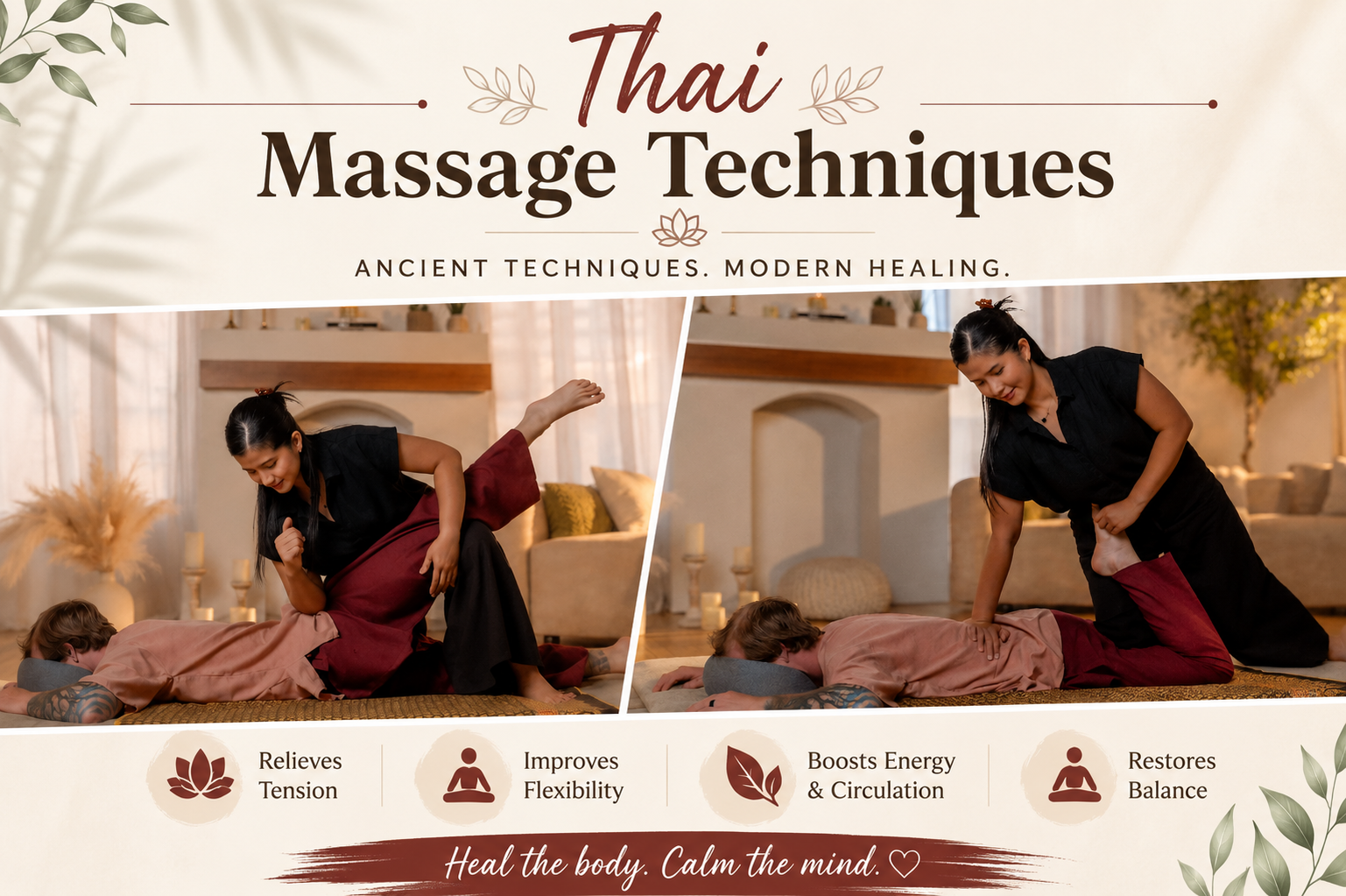
Thai massage uses a mix of steady pressure, body compression, gentle stretching, and guided movement. A trained practitioner may use the hands, thumbs, elbows, forearms, knees, or feet based on the technique being used. Unlike many oil massages, Thai massage is usually done with the client wearing loose, comfortable clothes. The practitioner guides the body through simple movements and stretches.
At Sen Flow Body, Thai Massage & Stretch brings these traditional methods together in a calm, focused session.
What Are Thai Massage Techniques?
Thai massage includes several types of touch and movement. Each method works in a different way, and a practitioner may combine them during one session.
● Pressure: Direct pressure placed on a certain part of the body.
● Compression: Repeated pressure on muscles and soft tissue.
● Stretching: Gentle movement used to lengthen and loosen muscles.
● Joint movement: Slow movement of a joint through its natural range.
● Rhythmic movement: Repeated movements done at a steady pace.
● Traditional Sen-line concepts: Thai massage has traditional ideas about energy paths called Sen lines.
The techniques can be changed based on comfort, movement, physical condition, and the main goal of the session.
8 Common Thai Massage Techniques
1. Acupressure and Point Pressure
Point pressure means using the thumbs, palms, or fingers to press certain areas of the body. The practitioner controls the pressure and changes it based on the body area and the client's comfort.
Thai massage point pressure is different from acupuncture. Acupuncture uses needles, while acupressure uses pressure from the hands or other parts of the body. No needles are used.
2. Rhythmic Compression
Rhythmic compression means applying pressure again and again at a steady pace. A practitioner may use the palms, thumbs, forearms, or other body parts.
The pressure is controlled instead of being one hard push. This method can be used over muscles and soft tissue as part of a full Thai massage session.
3. Passive Stretching
Passive stretching is one of the main parts of Thai massage. The practitioner moves the client's body while the client stays relaxed. The client does not need to stretch the body on their own.
Some Thai massage stretches look similar to assisted yoga. The practitioner controls the movement and keeps the stretch within a comfortable range.
4. Assisted Yoga Positions
Thai massage may include positions similar to yoga. The practitioner guides the client's arms, legs, hips, or upper body into a stretch.
These movements can focus on flexibility and easy body movement. Each position should match the client's range of motion. A trained practitioner should never force the body into a position.
5. Palm and Thumb Pressure
Palms and thumbs create different types of pressure. A palm covers a wider area and can give even pressure. A thumb can focus pressure on a smaller area.
Practitioners can change hand position, pressure, and speed based on the area being treated. This allows the massage to be adjusted during the session.
6. Elbow and Forearm Techniques
The elbows and forearms can cover more space than the fingertips. A trained practitioner may use them to apply steady pressure over larger muscle areas.
Forearms can give broad pressure, while elbows can give more focused pressure. Both methods need careful control. Strong pressure should never cause sharp or painful sensations.
7. Foot-Based Techniques
Some traditional Thai massage methods use the feet. A trained practitioner may use the foot to apply certain types of pressure while keeping good control of balance and movement.
Foot techniques require proper training. The amount of pressure should also match the client's comfort and physical condition.
8. Joint Mobilization and Movement
Joint movement involves gently moving a joint through its available range. The practitioner controls the movement and pays attention to how the body responds.
The joint should never be pushed past its natural range. A good practitioner changes or stops the movement if it causes pain or discomfort.
What Are Sen Lines in Thai Massage?
Sen lines are part of traditional Thai massage beliefs. They are described as energy paths within the traditional Thai approach to bodywork. Practitioners may use pressure and movement along these paths during treatment.
Sen lines are not the same as nerves, muscles, blood vessels, or bones. Modern science does not recognize Sen lines as physical body structures. They are part of traditional Thai massage theory. We use traditional Thai bodywork methods along with practical massage techniques and knowledge of body movement.
Thai Massage Techniques by Body Area
Different parts of the body may need different massage methods. A practitioner can change the pressure and movement based on the area and the client's comfort.
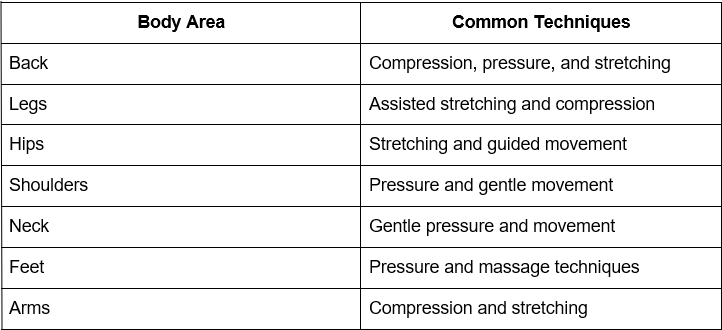
The same technique may not work for every person. A trained practitioner can adjust the session as needed.
Thai Massage Techniques vs. Other Massage Techniques
Thai massage combines pressure, compression, stretching, and guided movement. It is commonly done with the client fully clothed on a mat.
● Swedish massage uses smooth strokes, kneading, and other flowing hand movements. Massage oil is commonly used, with direct contact on the skin.
● Deep tissue massage uses firm pressure on deeper muscle areas. It may focus on specific areas where muscle tightness is present.
● Shiatsu is a Japanese massage style that uses pressure from the fingers, thumbs, and palms.
● Sports massage may use massage, stretching, and movement techniques for active people and those involved in physical activity.
The main difference is how each type of massage is done and which techniques are used most.
Which Thai Massage Technique Is Right for You?
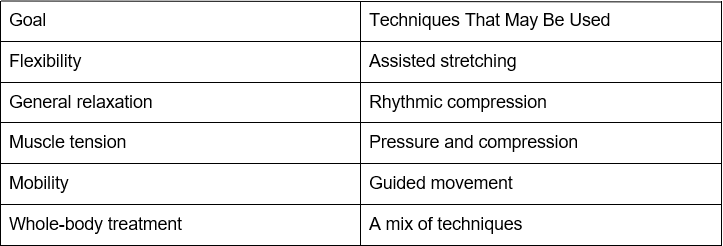
A trained practitioner should choose techniques based on the client's needs and physical condition. Pressure, stretching, and movement can all be changed during treatment.
Are Thai Massage Techniques Safe?
Thai massage can be suitable for many adults when provided by a trained practitioner. Still, some techniques may need to be changed for certain health conditions.
Keep these points in mind:
● Tell the practitioner about injuries or health concerns before treatment.
● Share any recent surgery or medical procedure.
● Tell the practitioner if the pressure becomes uncomfortable.
● Never force a painful stretch.
● Take extra care during pregnancy.
● Discuss blood-thinning medication before treatment.
● Allow the practitioner to change a technique when needed.
Anyone with a health concern should speak with a healthcare professional before massage when appropriate.
What Should a Trained Thai Massage Practitioner Know?
A trained practitioner should know basic anatomy, body movement, pressure control, and safe stretching. Good training also includes learning about health conditions that may require changes to a massage.
Important skills include:
● Knowing basic body structure and movement
● Using safe stretching methods
● Controlling pressure
● Knowing when a technique may not be suitable
● Communicating clearly with clients
● Understanding traditional Thai massage methods
● Knowing when to change or stop a technique
Clear communication is important during the whole session. The practitioner should pay attention to comfort and change the treatment when needed.
Key Takeaway
Thai massage brings together pressure, compression, assisted stretching, guided movement, and traditional Sen-line concepts. Each method has a different purpose, and several techniques can be used during one session.
Pressure can be focused or broad. Compression uses repeated pressure. Passive stretching adds guided movement, while joint techniques focus on natural movement. Traditional Sen-line ideas add another part of Thai massage theory. At Sen Flow Body, these methods come together through Thai Massage & Stretch. The session can be adjusted based on comfort, movement, physical condition, and personal goals.
Frequently Asked Questions
1. What are the main techniques used in Thai massage?
Thai massage includes focused pressure, rhythmic compression, passive stretching, assisted yoga positions, palm and thumb pressure, elbow and forearm work, foot techniques, and gentle joint movement. Several methods can be combined during one session.
2. What is the most common Thai massage technique?
Pressure and rhythmic compression are common Thai massage techniques. Practitioners may use palms, thumbs, fingers, forearms, or elbows to apply controlled pressure while keeping a steady and comfortable treatment pace.
3. What is Thai massage pressure technique?
Thai massage pressure technique uses focused or broad pressure on selected areas of the body. Practitioners may use thumbs, palms, elbows, or forearms and change the pressure based on comfort and the body area.
4. Does Thai massage involve stretching?
Yes, stretching is an important part of Thai massage. Practitioners guide the client's body through controlled passive stretches and movement. Some positions look like assisted yoga and focus on comfortable body movement.
5. What is passive stretching in Thai massage?
Passive stretching means the practitioner moves the client's body into a controlled stretch while the client stays relaxed. The practitioner controls the movement and range, so the client does not need to perform the stretch.
6. What are Sen lines in Thai massage?
Sen lines are energy paths described in traditional Thai massage theory. Practitioners may use pressure and movement along them. These paths belong to traditional healing theory and are not recognized as physical body structures by modern science.
7. Does Thai massage use elbows?
Yes, Thai massage can include elbow techniques. Trained practitioners may use elbows to apply controlled pressure to selected muscle areas. The pressure should match the client's comfort and should not create sharp or painful sensations.
8. Can Thai massage therapists use their feet?
Yes, trained Thai massage practitioners may use their feet for certain traditional methods. Foot techniques need proper training, balance, and pressure control. The technique should also match the client's comfort and physical condition.
9. What is the difference between Thai massage and deep tissue massage?
Thai massage combines pressure, compression, stretching, and guided movement, while deep tissue massage focuses more on firm pressure for deeper muscle areas. Thai massage also includes passive stretches and body movement during treatment.
10. How is Thai massage different from Swedish massage?
Thai massage combines pressure, compression, stretching, and guided movement, often with the client fully clothed. Swedish massage uses smooth strokes and kneading techniques, commonly with massage oil and direct contact with the skin.
11. Which Thai massage technique is best for flexibility?
Assisted stretching and guided movement are commonly used when flexibility is a main goal. A trained practitioner can control the range and pressure based on individual movement instead of forcing the body into deeper positions.
12. Which Thai massage technique is best for muscle tension?
Pressure and rhythmic compression can be used for areas with muscle tension. Practitioners may use palms, thumbs, forearms, or elbows while changing the pressure based on comfort and the area being treated.
13. Can Thai massage techniques be modified for beginners?
Yes, Thai massage techniques can be modified for beginners. A practitioner can use lighter pressure, smaller movements, and simple stretches. Clear communication also helps create a session suited to the client's comfort and experience.
14. Are Thai massage stretches safe?
Thai massage stretches should be gentle, controlled, and suited to the individual. Painful or forced movement should be avoided. Anyone with an injury, recent surgery, pregnancy, or certain health conditions should discuss treatment first.
15. Who should avoid certain Thai massage techniques?
People with recent injuries, recent surgery, certain health conditions, pregnancy-related concerns, or other health risks may need modified techniques. Blood-thinning medication can also require caution. Discuss relevant health concerns with a qualified practitioner before treatment.
Relax, Stretch & Reconnect at Sen Flow Body
Discover Thai bodywork with Sen Flow Body. Thai Massage & Stretch combines traditional Thai methods with pressure, compression, guided movement, and assisted stretching. Each session can be adjusted to match your comfort and physical needs.
Ready to experience Thai massage in a calm and personal setting? Book a session with usand explore the benefits of focused pressure, guided movement, and traditional Thai massage techniques.
