
Thai Massage: Benefits, Techniques, and What to Expect
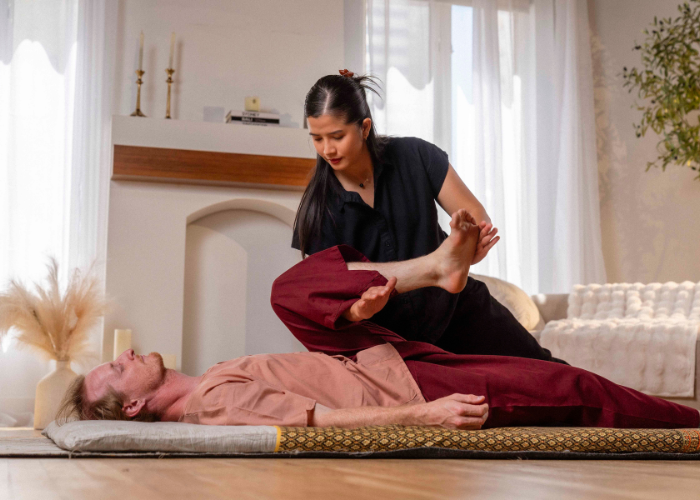
Thai massage offers a refreshing approach to bodywork. You remain fully clothed on a floor mat while the therapist uses pressure, movement, and assisted stretches. The Thai massage benefits can include better flexibility, muscle relief, easier movement, and relaxation. At Sen Flow Body, traditional Thai bodywork meets modern recovery knowledge for a focused experience built around your goals.
What Is Thai Massage?
It is a traditional form of bodywork rooted in Thai healing practices. It combines rhythmic pressure, assisted stretching, and controlled movement. No oil is needed, and loose clothing or athletic wear works well.
The therapist guides your body through positions while using hands, thumbs, elbows, knees, or feet. Pressure and movement can be adjusted for comfort and goals. For an in-home session, we bring the traditional floor mat to your space. A clear area of about 10 by 10 feet gives enough room for stretching.
Key Benefits of Thai Massage
The benefits of Thai massage come from combining pressure with movement. The treatment may help loosen tight muscles, improve range of motion, and build body awareness.
Potential benefits include:
● Greater flexibility and range of motion
● Relief from muscle tightness and soreness
● Better awareness of movement
● A refreshed state after treatment
These Thai massage benefits can vary with mobility, activity level, and treatment goals.
FAQ: Can Thai Massage Help With Tight Muscles?
Yes. Thai massage combines pressure and assisted stretching to work through muscle tension. Your therapist can adjust intensity and movement based on comfort, mobility, and personal goals.
Thai Massage Techniques Used During a Session
Different Thai massage techniques may be combined during one treatment. Common methods include:
● Rhythmic compression along muscles and traditional energy lines
● Assisted stretches for hips, legs, shoulders, and spine
● Gentle joint movement to encourage mobility
● Pressure using hands, thumbs, forearms, elbows, knees, or feet
The Thai massage techniques may be adapted for mobility, tension, and recovery goals, while pressure remains guided by your comfort throughout each session.
FAQ: Do I Need to Wear Special Clothing?
No. Comfortable, loose clothing works well. Yoga pants, leggings, shorts, or athletic wear allow easy movement. Thai massage is performed fully clothed, so there is no need to undress or use massage oil.
What to Expect From Thai Massage Therapy
A first Thai massage therapy session begins with a short conversation about your goals, concerns, health history, and activity level. This helps shape the treatment. During this, you remain clothed and move through guided positions. You may experience compression, stretching, rocking, and slow movement. The work should stay within a comfortable range.
Sen Flow Body brings treatment to your home, hotel, or private space. Prepare a clear mat area before the appointment.
FAQ: Is Thai Massage Painful?
Thai massage should not require you to push through sharp pain. Some pressure or stretching may be intense around tight areas. Tell your therapist if you need less pressure, slower movement, or a different position.
How Long Does Thai Massage Last?
A session commonly lasts 90 to 120 minutes. The right length depends on your goals, schedule, and treatment areas. A shorter appointment can focus on specific tension, while a longer session allows more time for full-body work.
After treatment, drink water and move gently. If you have a recent injury, surgery, blood clot, active inflammation, skin infection, or another health concern, speak with a healthcare professional before treatment.
FAQ: How Frequently Should I Get Thai Massage?
Frequency depends on your goals. A single session may suit occasional soreness or recovery. For ongoing tension or mobility goals, your therapist can suggest a schedule based on your response between appointments.
Why Choose Sen Flow Body?
Sen Flow Body brings Thai bodywork directly to clients across Phoenix and the greater East Valley. The practice combines traditional Thai healing with modern bodywork knowledge. Therapist Pitchapa “Jane” Peeples grew up in Northern Thailand and learned traditional Thai massage within her family before completing professional training in the United States.
Each Thai massage therapy session can be tailored for active lifestyles, muscle tension, mobility goals, or recovery. The approach suits clients who want focused bodywork without traveling to a clinic.
FAQ: What Should I Do Before My First Session?
Wear loose, comfortable clothing and clear enough floor space for movement. Share your goals, injuries, health concerns, and pressure preferences before treatment begins. Your therapist can then tailor the session to your needs.
A Practical Choice for Bodywork
The benefits of Thai massage can come from pressure, stretching, movement, and body awareness working together. Thai massage can suit people seeking flexibility, reduced tension, or focused recovery through practical therapeutic bodywork.
Knowing what Thai massage helps you to decide if this style matches your needs and expectations. These benefits make it useful for active clients and people dealing with everyday muscle tightness.
Ready to Give Your Body a Fresh Start?
Book a session with Sen Flow Body and experience personalized Thai bodywork brought directly to your home or private space. Let focused movement, skilled pressure, and traditional techniques guide your next focused recovery session.
