
What to Expect from Thai Massage: A Complete Guide for First-Time Clients
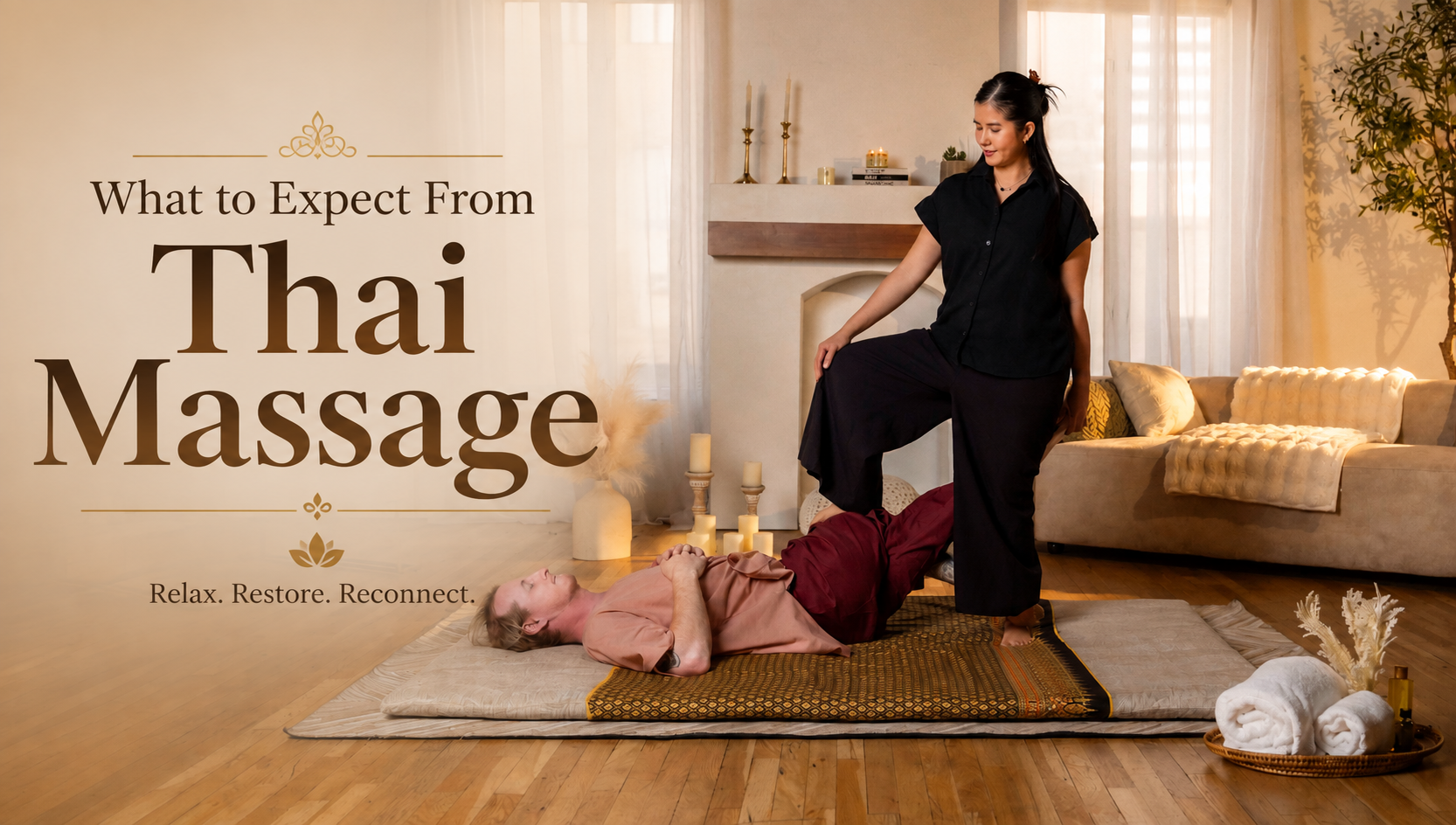
Thai massage is a traditional form of bodywork that uses assisted stretching, pressure, compression, and yoga-like movements. Unlike many Western massage styles, it is generally done on a floor mat without massage oil. Clients stay fully clothed in loose, comfortable clothes. For a first session, you can expect a short consultation, gentle warm-up, guided stretches, focused pressure, and time to relax.
What Is Thai Massage?
Thai massage is a type of bodywork that combines pressure, stretching, and guided movement. It is also known as Thai yoga massage or assisted yoga because the practitioner guides your body through movements similar to some yoga poses. Unlike many Western massage styles, Thai massage is not based mainly on long strokes over the muscles. The practitioner may use the hands, thumbs, palms, elbows, forearms, and feet to apply controlled pressure.
Traditional Thai massage is linked with the idea of Sen energy lines. Modern practitioners may focus more on practical goals such as better movement, relaxation, flexibility, and easing muscle tension. Stretching is a major part of the treatment. Your practitioner guides your body through passive stretches while you relax and breathe normally.
What Happens During a Thai Massage?
A Thai massage session can follow a simple flow. Your exact treatment may change based on your needs, comfort, and goals.
1. Initial Consultation
Your session may begin with a short conversation about your health and what you want from the massage. This gives your practitioner useful information before the bodywork begins.
You may discuss:
● Current pain or discomfort
● Recent or past injuries
● Mobility concerns
● Preferred pressure level
● Areas you want treated
● Your main treatment goals
● Relevant health concerns
Clear communication helps your practitioner choose suitable techniques for your session.
2. Getting Comfortable
Thai massage generally does not require oil or direct skin contact. You remain fully clothed during the treatment. Loose, soft, and stretchy clothing is a good choice. The massage is commonly performed on a floor mat or massage futon instead of a traditional massage table. Flexible clothing makes it easier to move through assisted stretches and different positions. Avoid tight jeans, stiff fabrics, or clothing that limits movement.
3. Gentle Warm-Up
The practitioner may begin with gentle pressure, compression, and slow movements. This helps prepare your muscles and joints before stronger pressure or deeper stretches are used. The warm-up also gives you time to settle into the session and get used to the practitioner's touch.
4. Assisted Stretching
Assisted stretching is one of the main parts of Thai massage. Your practitioner guides your arms, legs, hips, or other areas through passive stretches and yoga-like positions. You do not need to perform the stretches yourself. Instead, you relax while your practitioner controls the movement. A stretch should never be forced. Tell your practitioner if you notice sharp pain, strain, or discomfort during any movement.
5. Pressure and Bodywork
Thai massage can use firm, rhythmic pressure on selected areas of the body. The practitioner may use different parts of the body based on the technique and treatment area.
These may include:
● Hands
● Thumbs
● Palms
● Elbows
● Forearms
● Feet
Pressure should stay within a comfortable range. If it feels too strong or too light, let your practitioner know so the technique can be changed.
6. Cool-Down and Post-Treatment
The final part of the session may include slower movements and lighter pressure. This gives your body time to settle after stretching and active bodywork. After the massage, you may feel relaxed, loose, or slightly tender. Drinking water and giving your body some quiet time can help you transition back into your normal routine.
What Does Thai Massage Feel Like?
Thai massage can feel different from a traditional oil massage because it combines pressure with movement and stretching.
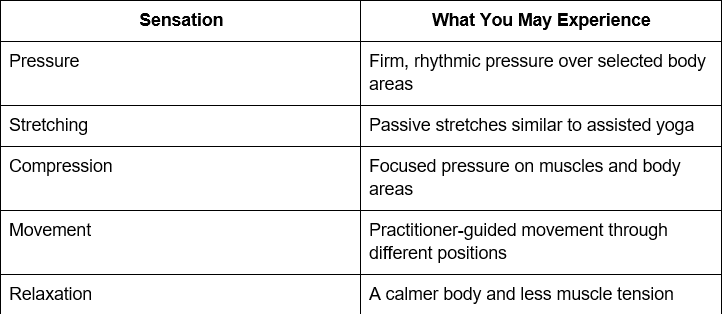
Thai massage should not be treated as a test of how much pain you can handle. Firm pressure may be part of the treatment, but sharp or strong pain is not the goal. Always tell your practitioner if a movement or pressure level becomes uncomfortable.
What Should You Wear for Thai Massage?
Choose comfortable, loose-fitting, and stretchable clothes. Soft pants, athletic wear, and flexible tops can work well. Your clothes should allow your arms and legs to move freely. Avoid restrictive jeans, stiff clothing, or tight waistbands.
Since you stay dressed during the treatment, choosing the right clothing can help you remain comfortable throughout the session.
Is Thai Massage Done With Oil?
Thai massage is generally performed without oil because the practitioner works through your clothing. Pressure, compression, stretching, and guided movement are central parts of the treatment.
This differs from massage styles such as Swedish massage, where oil is commonly used for smooth strokes over the skin.
How Long Does a Thai Massage Take?
Thai massage session lengths can vary based on the practitioner, service, and your needs. A session of around 90 minutes is common, although shorter and longer appointments may also be available.
A first session may need enough time for a short consultation, warm-up, stretching, bodywork, and a gentle finish. Your practitioner can help you choose a session length based on your goals and comfort.
What Are the Potential Benefits of Thai Massage?
Thai massage may offer several possible benefits, although results can vary from person to person. Research on massage therapy also differs by health condition.
Possible benefits include:
● Better flexibility
● Improved range of motion
● Less muscle tension
● Greater relaxation
● Temporary relief from some types of pain
● Better awareness of body movement
Thai massage should not be described as a cure for chronic pain or illness. It also should not be promoted as a detox treatment. If you have a health condition, discuss massage with a qualified healthcare professional when needed.
Thai Massage vs. Traditional Massage
Thai massage and traditional Western massage can provide relaxing bodywork, but the experience can be quite different.
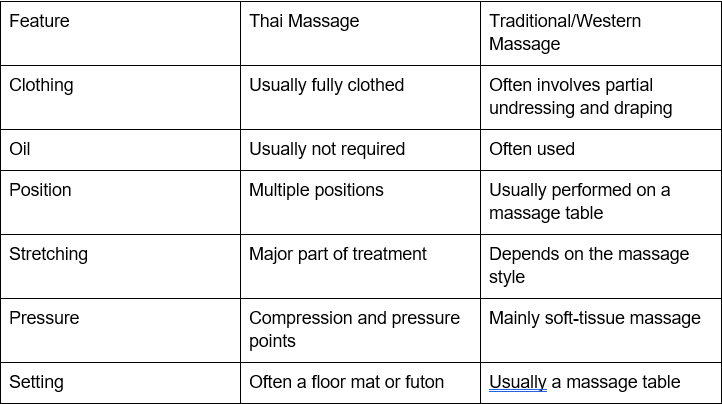
Thai massage has a stronger focus on movement and assisted stretching. Many Western massage styles place more focus on working the muscles and soft tissues while the client remains on a table.
Is Thai Massage Safe for Everyone?
Thai massage is not right for every person or every health condition. Before treatment, share relevant health information with your practitioner.
Extra care may be needed if you have:
● Blood-clot concerns
● Use blood-thinning medicines
● Certain bone or spine conditions
● A high-risk pregnancy
● A recent surgery
● An acute injury
Deep or vigorous massage may carry more risk for some health conditions. If you are unsure whether Thai massage is suitable for you, speak with a healthcare professional before booking a session. Your practitioner should also know about injuries or areas where movement needs to be limited.
How to Prepare for Your First Thai Massage
A little preparation can help you stay comfortable and get more from your session.
● Eat a light meal before your appointment.
● Wear loose and flexible clothing.
● Tell your practitioner about injuries or health concerns.
● Share your preferred pressure level.
● Drink enough water before and after treatment.
● Relax during stretches rather than forcing your body into a position.
● Let your practitioner know if any movement causes discomfort.
Good communication is one of the simplest ways to help your session match your needs.
What to Expect After Thai Massage
After a Thai massage, you may feel relaxed, refreshed, or more aware of your body. You may also notice a temporary feeling of muscle tenderness after firm pressure or stretching. Some clients may notice changes in mobility after the session. Your body can also feel as though it has had a good stretch.
Mild tenderness can happen, but sharp, severe, worsening, or lasting pain should not be treated as a normal part of massage. Seek medical advice if you experience concerning symptoms.
Frequently Asked Questions
1. What should I expect during my first Thai massage?
Expect a short talk about your health, comfort, and goals. You will stay dressed while your practitioner uses gentle pressure, stretching, and guided movements on a floor mat or massage futon.
2. Do you keep your clothes on during Thai massage?
Yes. You keep your clothes on during a Thai massage. Wear loose, comfortable clothes that let your arms and legs move freely during stretching, pressure work, and changes in body position.
3. Do you wear clothes during a Thai massage?
Yes, clothing stays on during a Thai massage. Loose pants, a soft shirt, or flexible workout clothes are good choices. Avoid tight jeans or clothing that makes movement difficult during your session.
4. Does Thai massage hurt?
Thai massage can include firm pressure and deep stretching, but it should not cause strong pain. Tell your practitioner if anything feels too intense so the pressure or movement can be changed.
5. Is Thai massage supposed to be painful?
No, pain is not the goal of Thai massage. You may notice firm pressure or a strong stretch, but sharp or severe pain means the technique should be adjusted for your comfort.
6. Do you need to use oil for Thai massage?
No, oil is generally not needed for Thai massage. The treatment is usually done through clothing, using pressure, compression, stretching, and guided movement instead of the long, smooth strokes used with oil massage.
7. What should I wear to a Thai massage?
Wear loose, soft, and stretchy clothing that allows easy movement. Comfortable pants and a flexible top are good choices. Avoid tight jeans, stiff fabrics, or clothing that limits your movement.
8. How long does a Thai massage usually last?
Thai massage session times can vary based on the service and your needs. A 90-minute session is common, but shorter or longer appointments may also be available at different massage centers.
9. What happens during a Thai massage session?
A session may begin with a short health and goal check. You then receive pressure, compression, stretching, and guided movements while staying clothed on a floor mat or massage futon.
10. How does Thai massage feel compared with a regular massage?
Thai massage is more active than many regular massage styles. You remain clothed and may move through several positions while receiving firm pressure, compression, and assisted stretches instead of mainly receiving oil-based muscle strokes.
11. Can Thai massage help flexibility?
Thai massage may help improve flexibility and range of motion through assisted stretching and guided movement. Results vary between individuals, and your practitioner should keep each stretch within a safe and comfortable range.
12. Should I eat before Thai massage?
A light meal before your appointment can help you stay comfortable. Avoid arriving very full, especially before a session involving stretching and movement. Give your body enough time to settle after eating.
13. Can I get a Thai massage if I have an injury?
It depends on the injury and its current condition. Tell your practitioner about any injury before treatment. For an acute or serious injury, speak with a healthcare professional before receiving massage.
14. Who should avoid Thai massage?
People with certain health conditions may need to avoid or change Thai massage. Extra care may be needed with blood-clot concerns, blood-thinning medicines, recent surgery, serious bone or spine problems, acute injuries, or high-risk pregnancy.
15. What should I do after a Thai massage?
Take some time to relax after your session and drink water. Mild muscle tenderness can occur after firm bodywork. If you have sharp, severe, worsening, or lasting pain, seek medical advice.
Experience Thai Massage at Sen Flow Body
Ready to try Thai massage for yourself? Sen Flow Body offers a welcoming setting for clients who want to explore Thai massage through guided movement, assisted stretching, pressure, and relaxing bodywork.
Book your session today and discover an approach designed around comfort, movement, and relaxation.
