
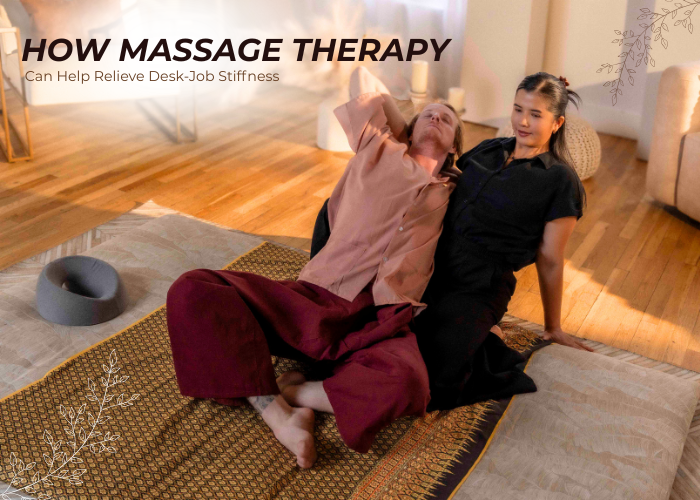
Long hours at a desk can leave your neck tight, shoulders tense, and back sore by the end of the day. Poor posture, limited movement, and repeated computer work can strain muscles. Over time, these habits can make daily tasks less comfortable. Massage for desk job stiffness may help ease muscle tension, improve comfort, and help your body relax.
At Sen Flow Body, clinical massage offers a hands-on approach to easing muscle tightness and helping office workers move with greater comfort.
Why Desk Work Causes Muscle Stiffness
Working at a computer keeps the body in similar positions for long periods. Leaning toward a screen, raising the shoulders, or bending the head down can strain the neck, upper back, and shoulders. The lower back can also become sore if a chair, desk, or screen is poorly placed. Repeated hand and arm movements may add tension to the forearms and wrists. Without regular movement breaks, these areas may become tight and tender.
Common signs of desk-related muscle tension include:
● A tight neck after computer work
● Sore shoulders from leaning toward a screen
● Lower back discomfort after long work periods
● Stiffness when standing after a long meeting
● Tired muscles after a full day at a desk
FAQ: Can massage help with stiffness caused by desk work?
Yes. Massage may ease muscle tension and improve short-term comfort after long hours at a desk. Results depend on the cause of the stiffness. Regular movement and better desk habits can also help.
How Massage Helps Ease Muscle Tension
Massage uses hands-on pressure and movement to work on tight muscles and nearby soft tissue. A trained therapist can adjust the pressure and techniques based on your comfort and needs.
For massage for office workers, the goal may be to ease tight muscles, improve comfort, and help the body relax after long periods of computer work. Some people notice less tension and easier movement after a session. Results vary based on the cause of the stiffness, the techniques used, and each person's health.
Massage may help by:
● Easing tightness in the neck, shoulders, and back
● Helping tense muscles relax
● Improving short-term comfort during movement
● Reducing stress linked to muscle tension
● Helping you notice areas where you hold tension
Massage can form part of a wider plan for muscle care. Short movement breaks, a suitable desk setup, and gentle stretches can help maintain comfort between sessions.
FAQ: How often should office workers get a massage?
The right schedule depends on your symptoms, health, and personal needs. Some people prefer occasional sessions, while others may benefit from a regular plan. A qualified therapist can help you choose a suitable schedule.
Relieving Neck and Shoulder Stiffness
The neck and shoulders carry much of the strain linked to poor desk posture. Looking down at a laptop, reaching for a mouse, or keeping the shoulders raised can leave these areas tight. Massage for neck and shoulder stiffness can focus on the muscles around the neck, upper back, and shoulders. Gentle pressure and slow massage strokes may help ease tension and make head and shoulder movement more comfortable.
Tell your therapist where the stiffness starts, how long it has lasted, and which movements cause discomfort. This information helps the therapist choose suitable techniques and avoid pressure that feels too strong. Massage should not cause sharp pain, numbness, or tingling. If these symptoms occur, stop the session and seek medical advice as needed.
FAQ: Can massage relieve neck and shoulder tension?
Massage may help relax tight muscles around the neck and shoulders. Gentle pressure can improve comfort and movement for some people. Persistent pain, numbness, or tingling needs medical assessment before treatment.
Easing Back Discomfort From Long Desk Hours
Long periods in one position can strain the lower back. Poor chair height, limited movement, and a lack of proper back support may add to the problem. The right approach depends on the source of the discomfort.
Massage for back pain from sitting may help relax tense muscles and ease short-term soreness. A therapist can focus on the lower back and nearby muscle groups, using pressure suited to your comfort level.
Massage works best alongside healthy work habits. Try to:
● Change position throughout the day.
● Stand and walk for a few minutes between tasks.
● Adjust your chair so your feet rest flat on the floor.
● Keep your screen near eye level.
● Use gentle movement to break up long work periods.
FAQ: Is massage enough to prevent desk-related back pain?
Massage may ease muscle tension, but it cannot prevent every cause of back pain. Regular movement, good posture, a suitable chair, and a well-arranged desk can help reduce strain during the workday.
If back pain is severe, keeps returning, or spreads down a leg, seek advice from a qualified health professional before booking massage.
Which Massage Approach May Help?
We offer clinical massage, which can be tailored to your areas of tension and comfort needs. Your therapist can discuss the pressure and techniques that suit your concerns.
Depending on your needs, a session may include focused work on tight muscles, gentle massage strokes, or guided stretching where suitable. Thai massage techniques may also form part of a clinical massage approach when appropriate. The aim is to address areas causing discomfort without pushing the body beyond its limits.
Tell your therapist about past injuries, current pain, recent surgery, or any health concerns before the session. Clear communication helps the therapist adapt the treatment to your needs.
How Long Should a Massage Session Last?
A session commonly lasts 90 to 120 minutes, depending on the service booked and your treatment goals. This time can allow for a discussion of your concerns and focused work on areas such as the neck, shoulders, and back.
FAQ: How long does a clinical massage session last?
A clinical massage session may last 90 to 120 minutes, depending on the service and treatment plan. Your therapist can discuss your needs, explain suitable techniques, and help you choose a session length.
You do not need to wait until stiffness becomes severe before seeking care. Your therapist can help you discuss a suitable session length and plan based on your comfort and needs.
Book a Clinical Massage Session With Me
Desk-related stiffness can affect your comfort long after you leave work. Sen Flow Body offers clinical massage tailored to your needs, with focused care for tense muscles and limited movement.
Contact me to discuss your concerns and arrange a session that fits your goals.
