
How to Tell If You Need Sports Massage or Deep Tissue Massage

Muscle pain, tightness, and slow recovery can make workouts and daily tasks harder. The right massage may help ease tension and improve movement. However, choosing sports massage or deep tissue massage depends on your activity level, muscle concerns, and treatment goals.
Each method uses different techniques to address muscle tension. Sen Flow Body offers massage services for clients who want to manage tight muscles, recover from physical activity, and move with greater ease.
What Is a Sports Massage?
Sports massage focuses on muscles used during exercise, sports, and other physical activities. It can help active people manage muscle tightness and recover after workouts. You do not need to be a professional athlete to benefit from this approach.
A therapist may use massage strokes, stretching, and focused pressure based on your needs. The session may focus on areas such as the legs, shoulders, back, or hips.
FAQ: Can You Get a Sports Massage If You Are Not an Athlete?
Yes. Sports massage can suit people at different fitness levels. If exercise, gym workouts, cycling, or other physical activities leave your muscles tight, a therapist can adjust the session to match your needs and comfort.
What Are the Main Sports Massage Benefits?
Some sports massage benefits include short-term relief from muscle tension, improved ease of movement, and help with post-workout recovery. A session may also help active people manage tightness in muscles used during repeated movements.
However, results vary from person to person. Massage works best alongside proper rest, enough water, and a suitable exercise plan. It cannot replace medical care for an injury.
What Is a Deep Tissue Massage?
Deep tissue massage focuses on areas of lasting muscle tension. A therapist uses slow strokes and firm pressure to work on deeper layers of muscle and nearby connective tissue. The goal is to ease tight areas and reduce some types of muscle discomfort.
This approach may suit people who spend long hours at a desk, perform physical work, or carry tension in their neck, shoulders, and back. The pressure should remain within your comfort level. Deep tissue massage should not cause sharp or severe pain.
FAQ 2: Can Deep Tissue Massage Help With Muscle Soreness?
Deep tissue massage may ease some types of muscle tension and discomfort. However, firm pressure can cause short-term soreness. Tell your therapist about your symptoms before the session, and let them know if the pressure becomes uncomfortable.
Deep Tissue vs Sports Massage: What Is the Difference?
The main difference between sports and deep tissue massage is the goal of the session. Sports massage focuses on muscles used during physical activity. Deep tissue massage targets areas with lasting tension and discomfort.
Here is a simple comparison:
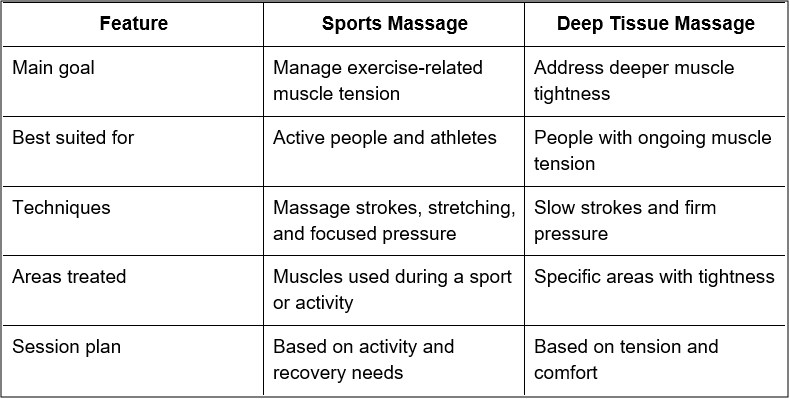
Both methods can use firm pressure. The best choice depends on your goals, symptoms, and how your body responds to massage.
FAQ: Is Sports Massage Better Than Deep Tissue Massage?
Neither option is best for everyone. Sports massage may suit exercise-related muscle tension, while deep tissue massage may suit lasting tightness in specific areas. Your symptoms, activity level, and comfort should guide your choice.
How to Choose the Right Massage for Your Needs
Start by thinking about what you want to improve. If muscle tightness follows exercise or a demanding training session, sports massage may be a good fit. If you have ongoing tension in your back, neck, or shoulders, deep tissue massage may suit your needs better.
You can discuss your goals with a qualified therapist before booking. Explain where you feel discomfort, how long it has lasted, and which activities make it worse. This helps the therapist plan a session around your needs.
FAQ: How Long Does a Sports or Deep Tissue Massage Take?
A session commonly lasts 90 to 120 minutes, depending on the service and your needs. Confirm the length when booking so you can plan your appointment and discuss the areas you want the therapist to focus on.
What to Expect During a Massage Session
Your therapist should discuss your concerns, pressure preferences, and health history before starting. Explain which areas need attention and mention any movements that cause discomfort. During the session, the therapist may adjust pressure and techniques based on your response. Speak up if the pressure feels painful or too strong.
After the session, drink water, rest as needed, and return to exercise at a pace that suits your body. The right frequency for future sessions depends on your muscle tension, activity level, health, and response to treatment. Your therapist can help you plan suitable appointments. Massage is not a substitute for medical care. Seek advice from a health professional if you have severe pain, sudden swelling, numbness, weakness, or an injury that is not improving.
FAQ: How Often Should You Get a Deep Tissue Massage?
The right frequency depends on your muscle tension, activity level, health, and response to treatment. Your therapist can help you plan suitable sessions. Allow your body time to recover between treatments, especially after firm pressure.
Find the Massage That Fits Your Needs
Choosing between sports massage and deep tissue massage starts with understanding your body and your goals. Sen Flow Body can help you explore massage options based on your activity level, muscle tension, and comfort.
Contact me to discuss your needs and find a suitable service for your wellness routine.
