
Thai Massage vs. Swedish Massage: Benefits, Differences, and Which One to Choose

Massage can be more than a relaxing break. The right style can help you unwind, improve movement, ease muscle tension, or simply give your body time to recover. Two well-known options are Thai and Swedish massage. Although both can promote relaxation and body awareness, their techniques, pressure, positioning, and overall experience are quite different.
For clients considering an in-home session with Sen Flow Body, understanding these differences can make choosing a massage style much easier. Here is a clear look at how each approach works and what you can expect.
What Is Thai Massage?
Thai massage combines pressure techniques, assisted stretching, and guided movement. The client remains clothed and typically receives the session on a floor mat. Rather than relying only on long strokes, the practitioner uses hands, palms, elbows, feet, and controlled body positioning to work through areas of tension.
The style can feel active compared with a traditional table massage. Gentle stretches may move the body through different positions, while pressure work targets areas that feel tight or restricted. We recommend clearing a 10-by-10-foot area for Thai sessions so there is enough room for mat work and stretching.
FAQ. Is Thai massage more active than Swedish massage?
Yes. Thai massage generally involves more assisted stretching, compression, and guided movement. Swedish massage usually involves the client resting on a table while the practitioner uses flowing strokes, kneading, and pressure across targeted muscle areas.
What Is Swedish Massage?
Swedish massage uses flowing strokes, kneading, friction, and gentle pressure across the muscles. It is commonly performed on a massage table with the client comfortably positioned under a sheet or towel.
The pace can range from light and soothing to firmer work based on personal preference. Long gliding strokes can create a calming rhythm, while kneading and focused pressure may address areas of muscle tension. Table sessions with Sen Flow Body require an 8-by-10-foot area, plus enough room for movement around the table.
Thai Massage Benefits Compared With Swedish Massage Benefits
The main difference comes down to how the body is worked. Thai massage combines pressure with assisted movement, while Swedish massage focuses more on flowing hands-on techniques.
Thai massage benefits can include:
● Greater emphasis on assisted stretching and mobility
● A more active bodywork experience
● Focused pressure on areas of muscular tension
● A combination of compression and guided movement
Swedish massage benefits can include:
● A calm and flowing massage experience
● Gentle to moderate pressure options
● Muscle-focused kneading and gliding strokes
● A comfortable table-based session
Neither style needs to be viewed as a one-size-fits-all choice. Your comfort, goals, preferred pressure, and tolerance for stretching can guide the decision.
FAQ. Can Thai massage help with flexibility?
Thai massage benefits include an emphasis on assisted stretching and movement. The approach may be useful for clients who enjoy active bodywork and want a session focused on mobility. Comfort and individual physical needs should guide the experience.
FAQ. What are the main Swedish massage benefits?
Swedish massage benefits can include relaxation, soothing muscle tension, and a calming hands-on experience. Pressure can be adjusted to personal preference, making the style suitable for clients seeking gentle work or firmer muscle-focused techniques.
Thai vs. Swedish Massage Benefits: A Quick Comparison
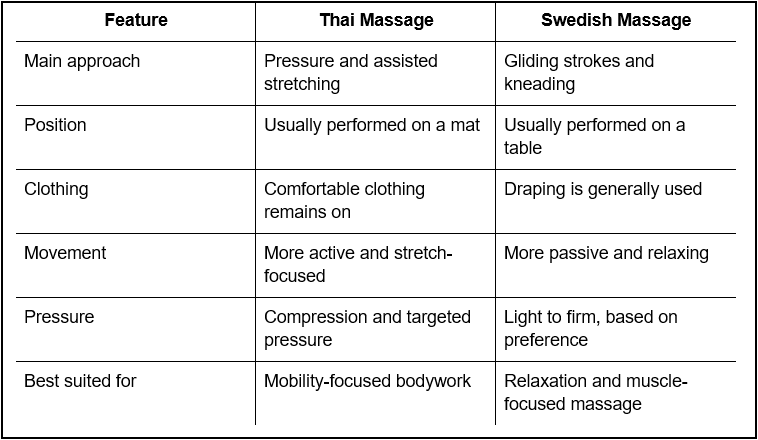
Looking at Thai vs. Swedish massage benefits can help you match the style to your personal needs rather than choosing based only on the name.
Which Massage Should You Choose?
Think about what you want from the session. If you enjoy stretching, movement, and focused pressure, Thai bodywork may fit your preferences. If you want a quieter experience with flowing strokes and a traditional table setting, Swedish massage may be a better match.
Your current comfort level also matters. A massage should feel purposeful without becoming overwhelming. Sharing your pressure preferences and areas of concern before the session gives the therapist useful direction.
We offer in-home sessions, so you can receive bodywork in a familiar private space without traveling to a studio. The service covers Phoenix, Scottsdale, Mesa, Chandler, Gilbert, Tempe, and surrounding areas.
FAQ. How do I compare both massage styles?
Consider Thai vs. Swedish massage benefits, your preferred pressure, and how much movement you want during the session. Thai work is more active, while Swedish massage uses flowing techniques. Your personal goals can help narrow the choice.
How Can You Prepare for Your Session?
Preparation is simple, but enough open space can make the experience smoother. For Thai bodywork, clear a 10-by-10-foot area with flat flooring. For table massage, allow an 8-by-10-foot area with walking room.
Keep the room comfortable, silence your phone, and place pets in another room during the appointment. Sen Flow Body arrives 15 to 20 minutes early for setup, while sessions begin and finish on schedule.
FAQ. Does Sen Flow Body offer in-home massage?
Yes. We provide mobile massage sessions at homes, hotels, and private spaces across Phoenix and the greater East Valley. Clients can prepare their space before arrival, allowing the session to take place in a familiar setting.
Choose the Style That Fits Your Body
The best massage style depends on your goals, comfort, and preferred experience. Thai massage offers pressure, stretching, and movement, while Swedish massage focuses on flowing strokes and muscle work.
If you are ready to experience personalized bodywork in your own space, contact Sen Flow Body to schedule your session.
